
Showing posts with label Movies. Show all posts
Showing posts with label Movies. Show all posts
Sunday, July 21, 2013
Top Comedies #1: The decline of our moral fiber.

Sunday, June 23, 2013
Top Comedies #2: "Serpentine!"

There is also bluffing, which is essentially overplaying your hand. See every Will Ferrell movie ever made for examples. Sure, Ferrell is funny. And when he has a strong hand to play, he wins big. But when he has a weak hand, despite a few quotable moments, he and his standard set of cohorts play it as though it was strong anyway. And the results are hard to watch, or even just plain forgettable. Dissecting these movies to see what went wrong is difficult. They seemed to have all the parts necessary to be a success. The problem is, when you put them together, there is only so far you can take them. Any further is based only on undue confidence in their strength. They are a bluff. The In-Laws is just the opposite.
Saturday, May 11, 2013
Top Comedies #3: From when talent was more than a matter of grooming.
Thursday, April 18, 2013
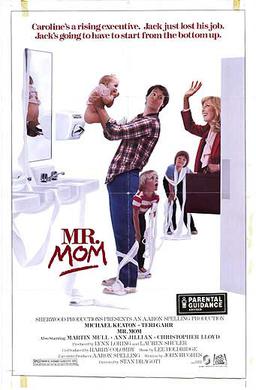
Top Comedies #4: Don't judge me, I was 14 when this came out.
Saturday, March 30, 2013
Top Comedies #5: Underrated Socially Conscious Bromance
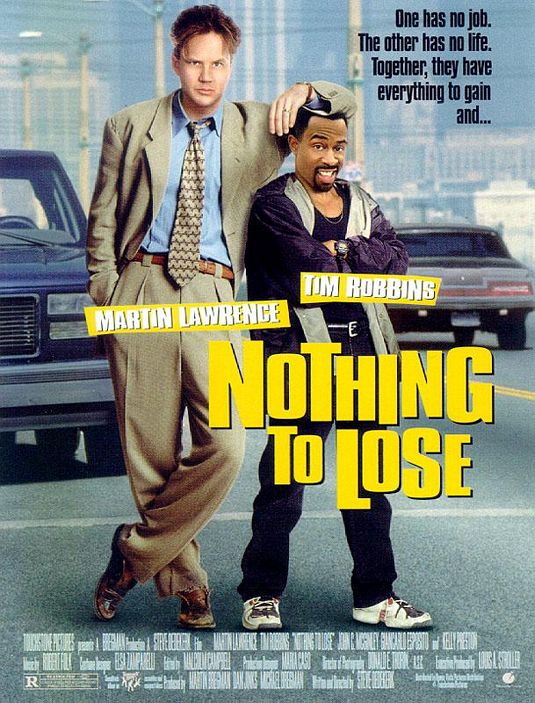 What could possibly be said to express how good this movie is? It will make you love Martin Lawrence. Yep, that's probably it. It's not likely that Nothing to Lose will make any other lists of top comedies. Describing this movie without making it seem like the generic buddy comedy meets caper flick that it may have actually become requires suspension of most critical faculties. After all, it is a movie best described by taking one genre and having it "meet" another. Still, you don't have to choose to like it the way you would, say, a Harry Potter movie. It almost dares you to dismiss it, and then it dazzles you with a humor free of cynicism that is impossible to resist.
Top Comedies Series
In an effort to make choosing topics to write on simpler for a while, I am going to do a list of my favorite comedies. It will feature five movies, in a rough order until I get to the big reveal of my pick for funniest movie ever made. That is, the other four movies featured aren't ranked as clearly as number one. It is just too difficult to quantify funniness.
Please, comment. Let me know what I get wrong. What I should have said. What you think.
Please, comment. Let me know what I get wrong. What I should have said. What you think.
Sunday, March 17, 2013
Feedback
OK, so I received some feedback this week. It was actually kind of nice. A relative asked me to post about The Matrix and Descartes. And a friend asked me to blog about the Peter Sellers classic Being There. I may have to break my own rule of keeping movies and philosophy separate to post on these, but I don't mind. Once I get a chance to see these again, and read up on Descartes, I'll write about them.
If you have any movies or ideas you would be interested in discussing, please comment. I'd be happy to try to accommodate.
If you have any movies or ideas you would be interested in discussing, please comment. I'd be happy to try to accommodate.
Billy Wilder
Like many great Americans, Billy Wilder was an immigrant. Born in Austria, Wilder had been a successful screenwriter in the German film industry before the rise of the Third Reich. Being Jewish, he moved to Paris. Then, in 1933, to Hollywood. Within six years, he had learned English well enough to write Oscar nominated screenplays. After that, he did what any former tabloid reporter with intimate knowledge of political tyranny and religious persecution would do. He perfected film noir.
Saturday, March 2, 2013
It is impossible to talk about the movie Dune, and keep your dignity.
Nothing can be said about Dune in anything but a whisper, or a shout. It is impossible not to love Dune. It is impossible not to mock it with mercilessness usually reserved for hatred. It is only possible to describe it with egregious generalizations, all of which are true and inaccurate. It is awesome. It is awful. It is a spectacle of awe-ness, both broad and narrow that is at the same time the best and the worst of movies. It is naivete fully realized. It is going North, to get South in a non-Euclidean dream universe where poles are interchangeable.
Monday, February 18, 2013
Will someone please explain Tom Cruise's knees?
As a fan of admittedly dumb movies, I don't have much justification for being a cranky jerk about someone like Tom Cruise. But, this is a blog post. If I was going to not say something just because it is unnecessarily sarcastic and lacking in perspective, then it wouldn't be any fun. Unlike your typical Netflix user, I see that it is sort of ridiculous to criticize a movie that isn't serious for not being serious. And that is not what I am doing. I sort of like the Mission Impossible franchise. It is kind of what I look for on a Friday night, when all I want to do is unwind after the grind of the working week. Mindless fun with enough story to keep you watching. I even bothered to watch the most recent installment, Ghost Protocol (see link above) in the theatre, something I rarely do recently (two kids), because it was directed by Brad Bird, who understands as good as anyone exactly what I want to see in a movie. And, while I will admit that Cruise has a large portion of movie star talent, I think the biggest problem with any Tom Cruise movie is the fact that he is in it. I recall one review of Ghost Protocol encouraging people to see it because it was "so good it will make you forget how much you don't like Tom Cruise." It almost succeeded.
Sunday, February 3, 2013
Galaxy Quest
Take a moment and recall a conversation you are almost sure to have had, about what makes a book a classic book. If you've never had this conversation, I suggest you avoid it. Without fail, an otherwise intelligent person will offer the following opinion, which is, just under the surface, a willful rejection of all cultural achievement since the Egyptians and the Phoenicians created and disseminated written language: that a great book is defined by being a "page-turner." That really good writing engages your attention and keeps you involved. That the quality of a book is equal to how fun it is to read. Please don't misunderstand me, I am not suggesting that great books cannot have this quality. No, the problem with this standard is that it does not apply to most of the books that we recognize as a culture to be classics. (Richardson's Clarissa somehow made it in to the top ten novels of all time according to The Guardian.) Without getting into a critical debate over whether cultural authority means anything, I'd like to claim that it is in fact the best standard. And, while acknowledging that this is a generalization with numerous exceptions, I also claim that anyone who believes they can disregard cultural authority in favor of their "page-turner" standard does so because they realize they hate most of the greatest books ever written and they don't want to accept the basic fact that they don't understand things they wish they did.
Saturday, January 19, 2013
Thoughts on James Bond and the release of Skyfall
Finally, after four years, the inevitable
follow-up to Casino Royale and Quantum of Solace has made its way to
theatres. This is the longest interval between movies while there was a sitting
Bond. But the enthusiasm generated from the success of Casino Royal has not worn off, despite the perceived failure of Quantum. The viewing public will no doubt
be subjected once again to curiously sincere and lavish praise of the revised
Bond movies. Truly head-scratching adjectives such as “serious,” “realistic”
and, “smart” will appear in otherwise competent critic’s columns. Rotten
Tomatoes already has it at 92%. Make no mistake, I count myself a fan of the
Bond movies. I will see it, and hopefully I will like it. But I will never make
a case that Bond is “realistic.” To do so is to misunderstand the nature of
Bond movies, and what makes them worth being a fan of.
Subscribe to:
Posts (Atom)